
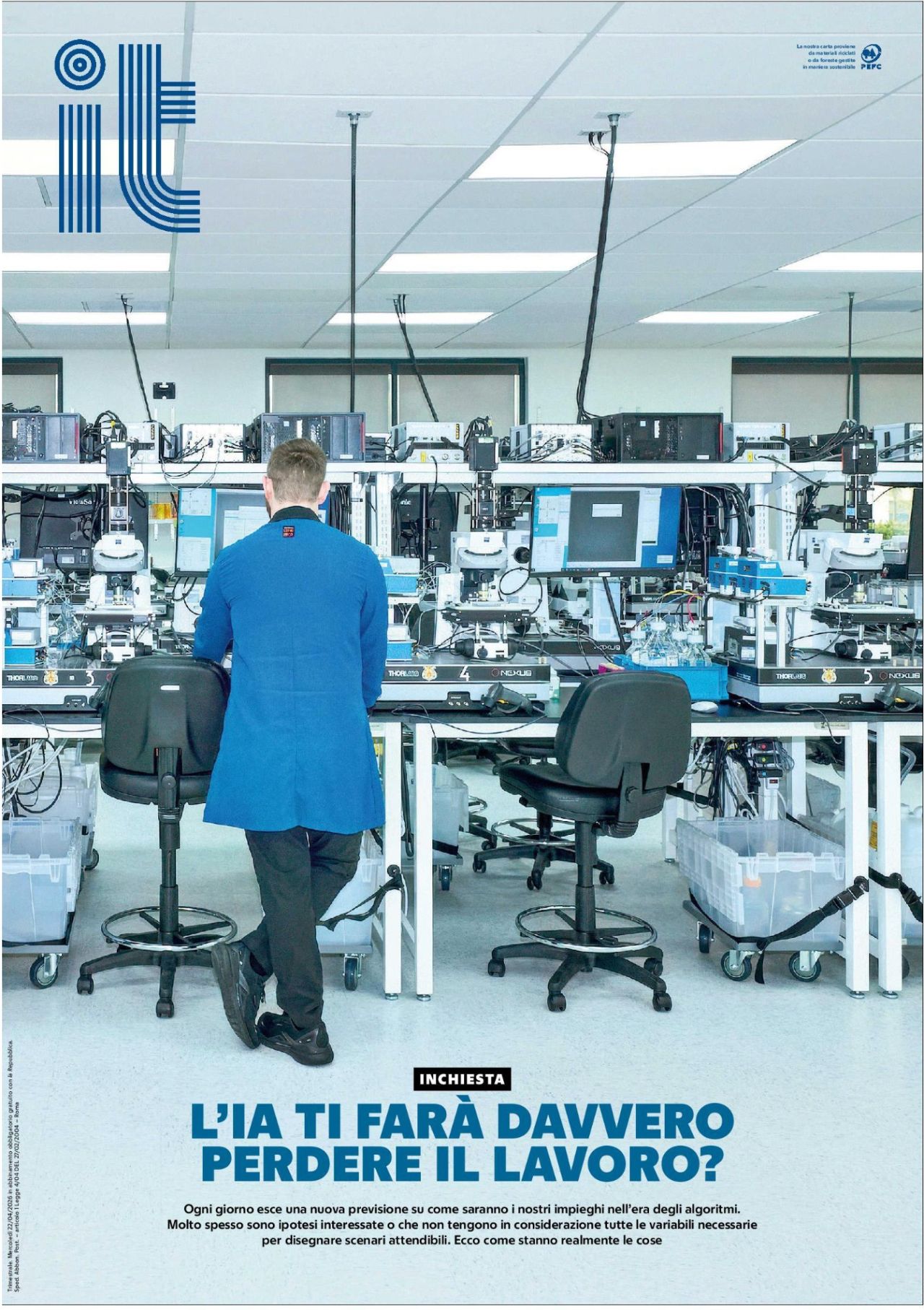
“Companies come to us for know-how, not for low-cost labor.” With this statement, Prof. Rita Cucchiara, Rector of UNIMORE and Head of AImageLab, clearly defines the distinctive role of her institution in the evolving landscape of artificial intelligence.
In her interview with La Repubblica, Cucchiara presents a vision of AI development that is deeply rooted in ethics, open-source principles, and industrial collaboration. UNIMORE stands out as a national and European reference point, not only for its scientific contributions but also for its ability to build a concrete bridge between academia and industry.
Rather than competing with global tech giants on proprietary models, Cucchiara emphasizes a pragmatic and application-driven approach. “We do not compete with OpenAI or large language models,” she explains. Instead, the focus is on translating research into real-world impact, developing tailored AI solutions that address specific industrial needs. This includes open-source models adapted and customized to solve concrete problems, from manufacturing to finance.
A key pillar of this strategy is the AI Center recently established in Modena in collaboration with NVIDIA, designed to provide shared GPU infrastructure for both research and industry. This initiative reflects a broader ecosystem where universities, companies, and public institutions collaborate to accelerate innovation and maintain technological sovereignty.
Cucchiara also highlights the importance of education and skills development. AI literacy, she argues, must become a fundamental component of training—not only for students, but also for professionals and public sector employees. However, technical skills alone are not enough: critical thinking, ethics, privacy awareness, and interdisciplinary competencies remain essential to ensure responsible and effective use of AI technologies.
At the same time, she raises a structural issue affecting the Italian system: talent retention. “It is not a problem of vocation, but of salaries,” she notes, pointing out that PhD graduates often find significantly better opportunities abroad. Without competitive conditions, the risk is losing key expertise needed to sustain national innovation.
Cucchiara also stresses the urgency of a broader European strategy. In a rapidly evolving geopolitical context, relying on external technologies could weaken Europe’s position. Investments in infrastructure, research, and talent are crucial to avoid becoming dependent on imported know-how.
Despite these challenges, her message remains forward-looking. The UNIMORE model demonstrates that a different approach is possible- one where collaboration, openness, and scientific excellence generate not only research outcomes, but also startups, patents, and new job opportunities.
In this vision, universities are not isolated institutions but active drivers of innovation ecosystems. And from Modena, Rita Cucchiara outlines a clear direction: building an AI future that is not only technologically advanced, but also ethical, sustainable, and distinctly European.